 +31708910864
 sales@camcom.co.nl

 Management's Insight

Coaxial Cables
-
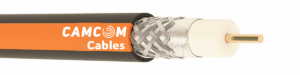
RG-11/U-4 Coaxial Cable
-
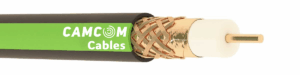
RG-11/U-6 Coaxial Cable
-
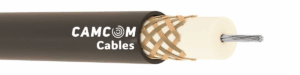
RG-11A/U Coaxial Cable
-
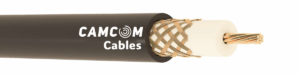
RG-213 Coaxial Cable
-
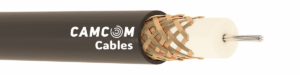
RG-216 Coaxial Cable
-
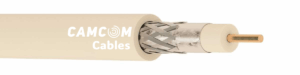
RG-58/U-4 Coaxial Cable
-
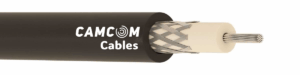
RG-58C/U Coaxial Cable
-
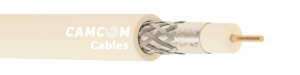
RG-59/U Coaxial Cable
-
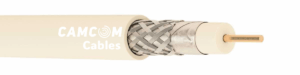
RG-59/U-4 Coaxial Cable
Coaxial Cables | Reliable, High-Fidelity Signal Transmission
Coaxial cables might not get all the attention, but they’re the backbone of high-frequency signal transmission. At Camcom our coaxial cables are designed to deliver consistent, high-quality performance across telecommunications, broadcasting, CCTV, satellite TV, data centers, and industrial automation. They ensure low signal loss, excellent impedance control, and long-term mechanical stability.
Why Coaxial Cables Matter?
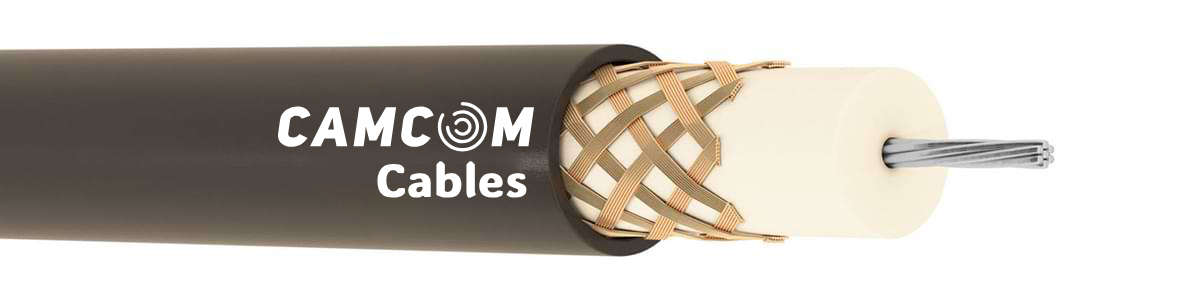
The magic of coaxial cables lies in their ability to transmit signals with minimal interference. The central conductor carries the signal, while the surrounding dielectric, metallic shield, and outer jacket protect it from electromagnetic interference (EMI) and physical stress.
Camcom coaxial cables come in:
• 50 Ω variants for data and RF applications
• 75 Ω variants for video and broadcast
Whether you’re sending analog or digital signals, our cables ensure high-fidelity transmission and minimal signal degradation over long distances.
How They’re Built
Camcom coaxial cables are engineered for both signal integrity and durability:
• Inner Conductor: Solid copper or copper-clad steel (CCS) for strength and bandwidth.
• Dielectric Insulation: Foamed or solid polyethylene for stable capacitance and electrical isolation.
• Shielding: Single, dual, or quad layers of aluminum/polyester tape and braided copper or aluminum, blocking EMI effectively.
• Outer Sheath: UV-resistant PVC, PE, or LSZH (halogen-free), suitable for indoor, outdoor, underground, or conduit installations.
Every dimension is precise, ensuring uniform impedance and minimal return loss, which is critical for high-resolution video, RF, and broadband systems.
Electrical Performance
• Impedance: 50 Ω (RF/data) or 75 Ω (video/BNC)
• Capacitance: 52–67 pF/m, depending on the design
• Attenuation: Low-loss for minimal signal degradation
• Shielding Effectiveness: Over 85% coverage with braid + foil configurations
• Velocity of Propagation: Up to 85%, optimized by dielectric
This makes them perfect for analog video, digital coax, satellite TV, and RF backbones.
Standards & Certifications
Camcom coaxial cables comply with:
• EN 50117: European CATV standards
• IEC 61196: International coaxial communication specifications
• RoHS / REACH: Free from hazardous substances
• ISO 9001: Ensuring consistent production and quality testing
Where They’re Used
• Broadcasting & Satellite Systems: RG-6 and RG-11 for low-loss, high-resolution video over long distances.
• CCTV & Security Systems: 75 Ω cables for analog and HD video; multi-shield options for stable signals.
• Telecommunications: 50 Ω for RF, cellular, and antenna interconnects with precise impedance.
• Data Centers & Control Rooms: Backbone communication and test equipment requiring high shielding.
• Commercial & Public Buildings: Broadband TV, intercoms, and satellite distribution in offices, hotels, and airports.
• Military & Industrial Applications: RF signal routing with mechanical strength, thermal stability, and excellent shielding.
Product Range
• RG-6 / RG-59: CCTV, CATV, home satellite systems
• RG-11: Long-distance applications with lower attenuation
• RG-58 / RG-213: RF and data networks
• Custom Designs: High-frequency instrumentation and OEM-specific needs
Built for Tough Environments
• UV-Resistant Sheaths: Ideal for outdoor and rooftop installations
• LSZH Options: Low smoke, halogen-free for public buildings, tunnels, and underground routes
• Operating Temperature: -40°C to +80°C (varies by type)
Our cables maintain signal integrity and mechanical durability even under harsh conditions, ensuring long-term reliability.
Why Choose Camcom Coaxial Cables?
With high shielding efficiency, excellent signal fidelity, and strong environmental resilience, Camcom coaxial cables deliver versatile solutions for:
• CCTV and video systems
• Broadcasting and satellite networks
• Telecommunications and RF infrastructure
They’re customizable, meet global standards, and consistently provide high-performance signal transmission for modern communication systems.


