 +31708910864
 sales@camcom.co.nl

 Management's Insight
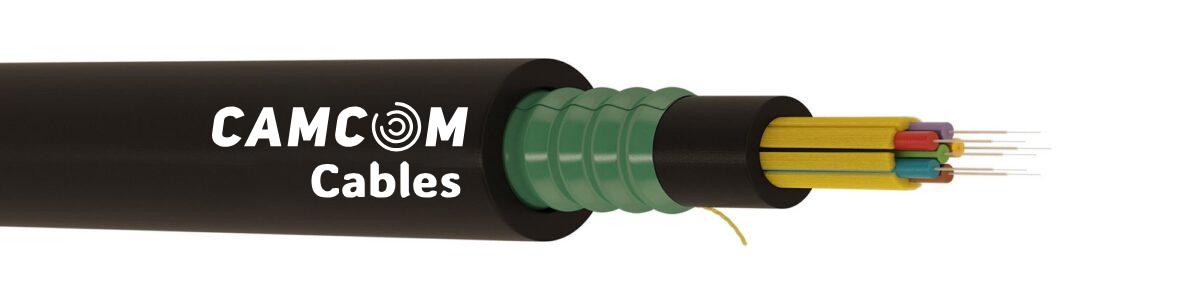

Central Loose Tube Fiber Optic Cable
-
A-D(ZN)(SR)T2Y Fiber Optic Cable
-
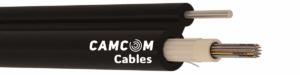
A-D(ZN)T2Y Fiber Optic Cable
-
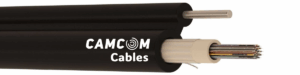
A-D(ZN)T2Y Fiber Optic Cable
-
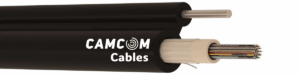
A-D(ZN)T2Y Fiber Optic Cable
Central Loose Tube Fiber Optic Cables | High-Capacity Outdoor Backbone Solutions
When it comes to high-performance outdoor fiber networks, Camcom’s Central Loose Tube Fiber Optic Cables are built to deliver. Perfect for backbone, long-haul, and campus networks, these cables combine mechanical strength with optical precision, ensuring reliable performance even in demanding telecom, broadband, and industrial environments.
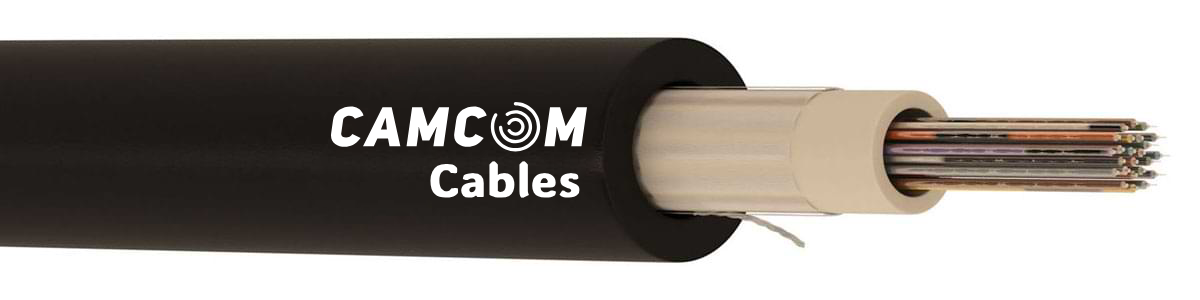
At the heart of the design is a durable gel-filled central tube that can house up to 48 fibers. This provides robust protection against moisture, temperature fluctuations, and environmental stress, making it ideal for direct burial, duct, or conduit installations.
High-Density Central Tube Architecture
The compact central loose tube design allows for high fiber density while simplifying installation and reducing material use. All fibers sit together in a single gel-filled tube, which ensures:
• Excellent moisture resistance
• Long-term fiber stability under mechanical load
This makes the design ideal for long-distance backbone networks where uniform attenuation, stability, and fiber density are critical.
Camcom offers both singlemode (G.652D, G.657A1, G.657A2) and multimode (OM1–OM5) variants, ensuring smooth integration with FTTX, SCADA, broadband Internet, and municipal utility networks. Every configuration delivers low attenuation, high bandwidth, and consistent optical performance for mission-critical systems.
Mechanical Strength & Flexible Sheath Options
Durability is key in outdoor environments. Camcom integrates FRP (fiber-reinforced plastic) or dielectric rods as central strength members. The outer sheath can be customized based on installation needs:
• PE (Polyethylene): Flexible, weather-resistant for underground or duct systems
• HDPE (High-Density Polyethylene): Strong and impact-resistant—perfect for direct burial and challenging terrains
• LSZH (Low Smoke Zero Halogen): Recommended for fire-regulated areas or indoor transition zones
For harsher conditions, CST (Corrugated Steel Tape) armored options offer rodent resistance and extra mechanical protection—ideal for railways, power infrastructure, tunnels, and rugged outdoor routes.
Standards Compliance & Applications
Camcom Central Loose Tube Fiber Optic Cables are tested to IEC 60794, ITU-T, and EN 50173 standards, ensuring global interoperability and long-term network stability.
Typical applications include:
• Telecom Backbone Networks: Long-haul, regional, and intercity optical routes
• Campus & Industrial Networks: Reliable connectivity between facilities, substations, and control centers
• Municipal Fiber Networks: Smart cities, transport systems, and public utilities
• Pipeline & Utility Routes: Durable cabling for harsh outdoor environments
Advantages of Camcom Central Loose Tube Cables
• High fiber density with up to 48 fibers per tube
• Superior moisture resistance thanks to gel-filled core
• Strong mechanical protection for rugged outdoor deployment
• Available in singlemode and multimode options
• Non-metallic and CST armored variants for challenging environments
• Fully tested and certified to international telecom standards
Build Future-Ready Networks
Camcom Central Loose Tube Fiber Optic Cables combine high-capacity optical performance with long-term durability. Whether for national backbone networks, metro systems, or industrial data links, these cables deliver consistent operation—even in harsh outdoor conditions.
Choose Camcom for reliable, high-performance optical cabling engineered for today’s most demanding communication and infrastructure projects.
FAQs
What’s the difference between loose tube and central tube designs?
• Central Tube: All fibers are housed together in one gel- or powder-blocked tube around the central strength member. Compact and cost-effective, suitable for up to ~48 fibers.
• Loose Tube (Stranded): Multiple tubes stranded around a central member. Scales to high fiber counts (144/288+), better for harsh environments and mid-span access.
What is a loose tube?
A loose tube is a protective plastic tube that holds one or more optical fibers. Fibers remain free inside, cushioned by gel or dry water-blocking elements to protect against moisture, temperature changes, and mechanical stress.
Advantages of loose tube fiber:
• Superior moisture protection
• Mechanical isolation from tensile and crush loads
• Stable performance across wide temperature ranges
• Mid-span access for branching
• Scalability to high fiber counts
How does loose tube fiber differ from ribbon fiber?
• Loose Tube: Individual fibers or small groups—flexible routing, easy single-fiber splicing
• Ribbon Fiber: Fibers bonded into flat ribbons (e.g., 12-fiber units) for ultra-high-density applications—great for large backbone trunks but less flexible


